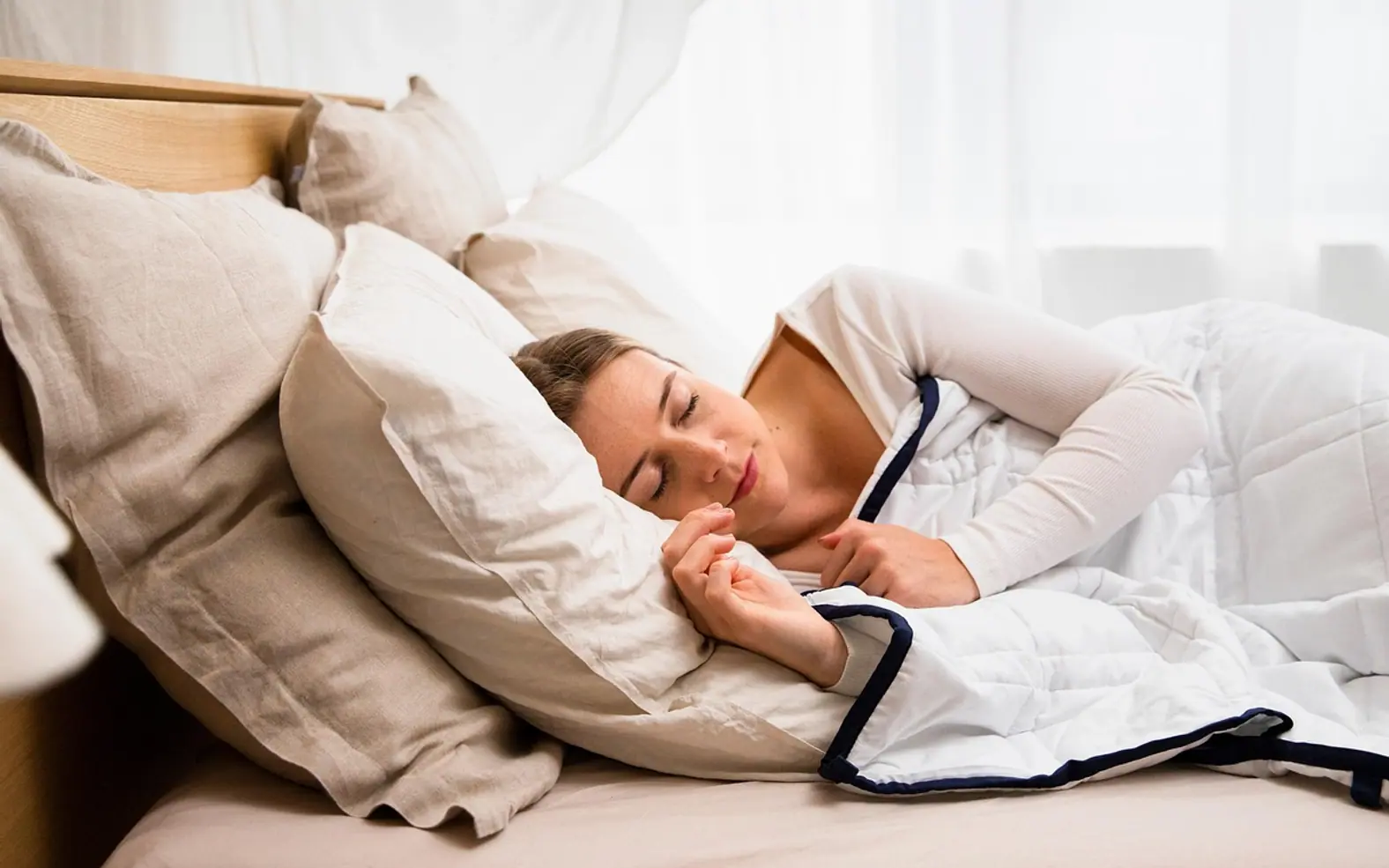
Best Temperature for Sleeping: How to Set Up a Cooler Bedroom

Sewn-in label
- Published
- Takes
- 3 min read
Think about the last time you slept badly on a sticky summer night. You may have kicked off the duvet, turned the pillow over to find the cool side and woken several times before dawn. Temperature is one of the quieter influences on sleep, and also one of the easiest to adjust once you know what you are aiming for.
What follows is general guidance for healthy adults. Babies, older people and anyone with a medical condition that affects temperature control may need a different set-up, which is worth discussing with a health visitor, GP or pharmacist.
Why the body likes a cooler room at night
Through the evening, core body temperature naturally drifts downward as part of the daily rhythm that prepares us for sleep. A room that is too warm works against that gentle cooling. A room that is slightly cool lets heat leave the body more easily, which many people find helps them settle and stay asleep for longer stretches.
Too cold is not ideal either. Shivering, cold feet and a tense, curled-up posture are just as good at keeping you awake. The goal is a room that feels pleasantly cool when you first get in, then comfortable once the bedding has warmed around you.
The range many guides mention
Sleep organisations commonly suggest a bedroom somewhere around 16 to 19 °C (roughly 60 to 67 °F) for adults. Treat that as a starting point rather than a rule. People differ: some run warm, some always have cold hands, and couples often disagree. Your bedding, nightwear and the humidity in the room all change how a given temperature feels.
A cheap room thermometer can be surprisingly revealing. Many bedrooms turn out to be warmer than people assume, especially upstairs rooms in summer or flats with shared heating.
Bedding and nightwear do half the work
- Layer rather than commit. A light duvet plus a blanket you can push aside gives more control than one heavy cover.
- Choose breathable fabrics. Cotton and linen sheets tend to feel cooler than synthetic ones for many sleepers.
- Separate covers for couples. Two single duvets on a double bed can end the nightly tug-of-war when one person runs hot.
- Warm feet, cool room. Thin socks help some people fall asleep in a cool bedroom without turning up the heating.
Keeping cool in summer
Hot spells are when temperature problems are most obvious. A few habits help without expensive equipment:
- Close blinds or curtains on the sunny side of the house during the day to keep heat out.
- Open windows once the outside air is cooler than the room, often late evening, and create a cross-breeze if you can.
- Run a fan, and if the air is very dry, place it so it moves air around the room rather than blowing straight at your face all night.
- Take a lukewarm shower before bed; very cold water can make some people feel more alert.
- Keep a glass of water by the bed and swap to a thinner sheet.
Staying comfortable in winter
In colder months the temptation is to heat the bedroom like the living room. Instead, many people sleep better with the radiator turned low or off at night and an extra layer on the bed. If damp or condensation is a problem, a little ventilation during the day helps, and a dry room usually feels warmer than a damp one at the same temperature.
A quick comparison
| What you notice | Likely cause | Simple change |
|---|---|---|
| Waking hot and kicking off covers | Room or bedding too warm | Lighter duvet, open window, fan |
| Cold feet, hard to drop off | Extremities chilled | Socks or a warm drink earlier in the evening |
| Stuffy air, headache on waking | Poor ventilation | Air the room before bed |
| Partners arguing over the thermostat | Different comfort ranges | Separate covers |
When temperature is not the whole answer
Night sweats that soak the sheets, hot flushes, or feeling feverish at night are worth mentioning to a GP, particularly if they are new or come with other changes such as weight loss. Hormonal changes around menopause are one common reason, and our article on menopause symptoms and supplements covers that stage of life in more detail. Some medicines can also affect how warm you feel, so a pharmacist is a good person to ask.
If the room is comfortable but you still wake in the small hours, other factors may be at play. Our guide to waking up at 3am looks at the most common reasons and what tends to help.
Don’t miss these
 Restful SleepHow to Sleep With a Cold: Easing a Cough and Blocked Nose at Night4 min
 Caring for ParentsLong-Distance Caregiving: Supporting an Ageing Parent From Afar3 min
 Stress & MindThe 5-4-3-2-1 Grounding Technique: A Senses-Based Reset for Anxious Moments3 min
 HealthSenior Care Options in Germany: Understanding Your Choices3 min
These pages are for general reading only and never stand in for someone who can examine you.